Use case
All Contra Costa County chamber members
Every member of every indexed chamber in a county, in one run — the local business base as structured rows.
Say you’re deciding whether to expand into Contra Costa County — a new sales territory, a franchise location, a regional service area — and before you commit a rep or a lease you want to see the local business base. How many businesses, in which towns, in which categories? The Chambers of Commerce across the county are the closest thing to a census of active local businesses that’s actually public. The problem is there isn’t one directory — every town’s chamber runs its own, on its own site, and you’d be visiting each of them separately.
The manual way, and what it costs
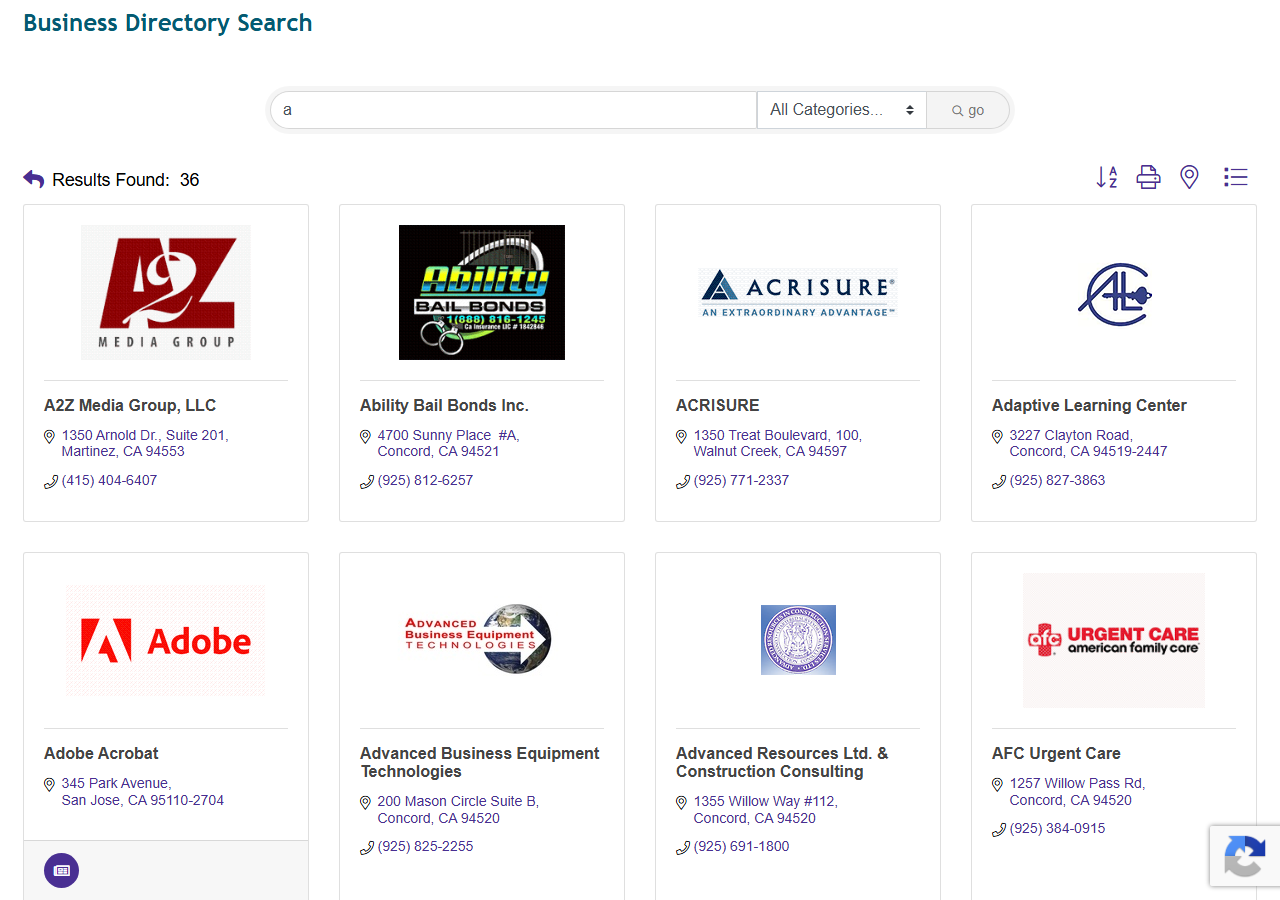
The free path works, and for one town it’s fine. You find that town’s chamber, open its member directory, and page through it. For a single chamber and a rough count, that’s reasonable and you should just do it.
Across a county it stops being reasonable. Concord, Danville, San Ramon — each is a separate chamber on a separate site, so a county view is the same manual paging repeated town by town, and then the arithmetic of stitching the counts together by hand. None of the directories export, so “how many insurance agencies are there across the whole county” isn’t a query you can run — it’s an afternoon of counting, and a number you’d have to redo from scratch next quarter.
The faster way
Chamber of Commerce Member Directory & Business Leads Scraper pulls every indexed chamber in the county at once.
{
  "county": "Contra Costa",
  "state": "CA",
  "maxResults": 1000
}
county: "Contra Costa" with state: "CA" is the whole move — one run resolves to every chamber the
actor has indexed in that county (Concord, Danville, San Ramon) and returns their combined
membership as one dataset, each row tagged with its chamber_name so you can still tell the towns
apart. Enrichment is left off here on purpose: for sizing a market you want the fast, cheap count of
who’s there, not an email for each one. (If you’re not sure which chambers a county resolves to, run
once with listChambers: true first — it’s free and lists them.)
What comes back
{
  "business_name": "A2Z Media Group, LLC",
  "chamber_name": "Concord Chamber of Commerce",
  "county": "Contra Costa",
  "phone": "(415) 404-6407",
  "city": "Martinez",
  "website": "http://a2zmediagroup.com",
  "categories": ["Marketing/Advertising"],
  "source_url": "https://business.concordchamber.com/list/member/a2z-media-group-llc-12179"
}| Field | Example value | Meaning |
|---|---|---|
business_name | A2Z Media Group, LLC | Member business name |
chamber_name | Concord Chamber of Commerce | Which town’s chamber this member belongs to |
categories | ["Marketing/Advertising"] | Chamber category — the axis you’ll pivot on |
city | Martinez | Business city |
phone | (415) 404-6407 | Business phone |
website | http://a2zmediagroup.com | Business website |
chamber_name and categories are the two columns the sizing question runs on: pivot the dataset by
those and you have counts of businesses per town and per category across the whole county — the market
map you were trying to build by hand. website and phone mean the same export doubles as the
outreach list once you’ve decided to enter, so the research pull and the go-to-market list are the
same run.
What you’d do with it
Export to CSV or Excel and pivot: businesses per chamber, businesses per category, the categories that
are dense versus the ones nobody’s serving. That’s your territory brief. When you decide to enter, the
same rows are already a call list — and a second run with enrichContacts: true on the town (or towns)
you’re starting in turns it into an email list too.
Worth knowing
The count reflects the chambers this actor has indexed in the county, not necessarily every
chamber that exists there — coverage is the seeded registry (run listChambers to see exactly which
towns are included), and it grows over time. It also covers chambers on the GrowthZone/ChamberMaster
platform, which is the common one but not universal; a town whose chamber runs a different platform
isn’t included yet. So treat the number as “the indexed chamber membership of the county,” a strong
lower bound on local businesses, not a claim to have counted every business in Contra Costa.
Run it yourself: How to run Chamber of Commerce Member Directory & Business Leads Scraper walks the whole thing step by step.
To turn one town into a ready-to-send outreach list rather than a count, Concord Chamber members with contact emails shows the enriched version. And Business Email, Phone & Contact Details Scraper is the standalone enrichment engine for when you already have the websites.
Last updated 2026-07-13